
Cataracts
A cataract is a cloudy lens inside the eye. The eye is like a camera. In a camera, a clear lens focuses light onto film where a picture is created. In the eye, there is a clear lens that focuses light onto the retina, which is like the film in a camera. If a camera lens has grease smeared on its surface, the picture will not be clearly focused. In the same way, if the normally clear lens in the eye becomes cloudy (a cataract), the “picture” on the retina will be blurred, causing the vision to be blurred.
What Causes Cataracts to Occur?
- Cataracts usually occur as part of the aging process
- Diabetes
- Eye injury
- Long-term use of certain medications (most notably steroids)
- Frequent and extensive exposure to ultraviolet light
What are the Symptoms of Cataracts?
The most common symptom of cataracts is a painless, gradual blurring of the vision.
Other cataract symptoms may include:
- Blurry vision when reading, watching TV, driving.
- Lights seem too “bright” or have a “halo” effect.
- Double or shadowed vision in one eye.
- Decreased night vision – sensitivity to glare from headlights.
- Fading or yellowing of colors.
Early in the development of a cataract, vision can sometimes be improved by changing the glasses’ prescription, but this is a temporary solution and vision will continue to become blurred. Once the cataract begins to interfere with daily tasks, such as reading and driving, cataract removal is the only real solution.
The rate at which a cataract grows is highly variable, even between the two eyes of the same individual. Age related cataract usually grows slowly, whereas the cataract associated with diabetes, eye injury or medications may grow more quickly. It is impossible to predict how fast a cataract will grow in any given person.
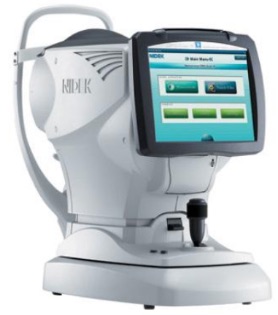
OPD III Topography
The innovative Nidek OPD III laser wavefront device is an important part of a complete cataract evaluation to better evaluate your unique vision needs. The OPD III measures and diagnoses your corneal curvature and astigmatism very accurately and this information is used to calculate which intra-ocular implant (IOL) is the best fit for your eye.
Cataract Surgery
Cataract surgery is a very common procedure. Cataract surgery is an outpatient procedure usually taking less than 30 minutes to complete. Complications (if any) are rare and usually treatable. Cataract removal improves the vision of patients about 95% of the time.
During the procedure, the doctor removes the cloudy cataract from the eye while the patient is under a local anesthesia. Next, the doctor inserts an intra-ocular lens (IOL), which permanently replaces the removed cloudy natural lens. The IOL focuses the light on the retina. Modern IOLs are designed for various functions and made out of different materials; your doctor will know which is most appropriate for your individual case.
Recovery from Cataract Surgery
After the operation the doctor will usually apply a patch on the eye and provide you with eye drops to use as directed. Most patients only need the patch for about hour (4) hours after their surgery. When the patch is removed the patient starts putting drops in their eye to prevent infection and assist the healing of the eye from the procedure.
Several follow-up appointments will be scheduled to ensure the eye is healing properly and initial results are sustained.
If you are experiencing any symptoms of cataract problems, we encourage you to contact us today to schedule a consultation.